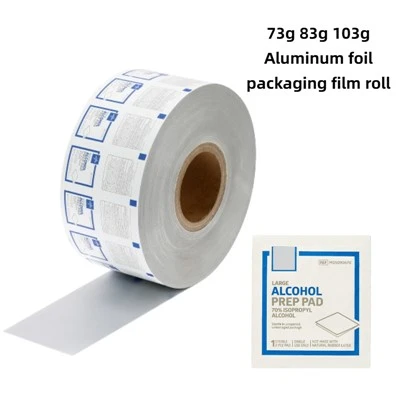
The production of aluminum foil is a precise and complex process, mainly consisting of the following steps:
Raw Material Selection: The raw material for aluminum foil is high-purity aluminum (purity typically ≥99.5%) to ensure flexibility and corrosion resistance. Common aluminum ingot grades include 1050, 1060, and 1100, among which 1050 aluminum ingot, with a purity exceeding 99.5%, is a commonly used material for food-grade aluminum foil.
Smelting and Hot Rolling: After being smelted at high temperatures, the aluminum ingots are cast into aluminum slabs approximately 20-40mm thick. Subsequently, through a hot rolling process, the aluminum slabs are rolled into aluminum coils 2-6mm thick. This process requires temperature control between 300-500℃ to prevent material embrittlement.
Cold Rolling and Annealing: The hot-rolled aluminum coils undergo multiple cold rolling processes, gradually thinning to 0.1-0.2mm. During the cold rolling process, intermittent annealing (at approximately 350℃) is required to eliminate work hardening and improve the ductility of the aluminum foil. Slitting and Packaging: The final aluminum foil is slitted into different widths (such as 300mm, 450mm, etc.) according to customer requirements and packaged with moisture-proof materials to ensure it is not contaminated during transportation and storage.