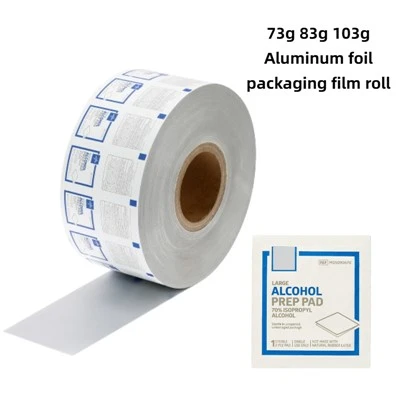
1. Material: The core material of aluminum foil is aluminum, but the purity, alloy composition, and processing technology may vary between different products. High-purity aluminum foil has better ductility and corrosion resistance, making it suitable for food packaging or applications requiring long-term preservation. Adjustments to the alloy composition can enhance the strength or heat resistance of the aluminum foil, meeting specific industrial needs.
2. Thickness: The thickness of aluminum foil directly affects its strength and insulation performance. Generally, thicker aluminum foil has higher strength and better insulation. However, excessively thick aluminum foil may increase costs and may not be flexible enough in some applications. Therefore, a balance between thickness and cost should be struck based on specific needs. For example, aluminum foil commonly used in home baking is typically between 0.01-0.02 mm thick, meeting packaging requirements without being too heavy.
3. Size: Aluminum foil comes in various sizes, ranging from a few centimeters to tens of centimeters in width, and the length can also be customized. The appropriate size should be determined based on the intended use. For example, kitchen aluminum foil is typically chosen in wider widths to wrap large food items; while industrial aluminum foil may require custom sizes based on equipment dimensions or packaging needs.
4. Surface Treatment: Aluminum foil offers various surface treatments, including smooth, embossed, and coated surfaces. Smooth aluminum foil is easy to clean and suitable for food packaging; embossed aluminum foil increases friction to prevent slippage; and coated aluminum foil may offer better corrosion resistance or heat insulation. The appropriate surface treatment should be selected based on specific needs.
5. Brand and Certification: Choosing well-known brands and certified aluminum foil ensures product quality and safety. For example, food-grade aluminum foil requires FDA or other food contact material certifications to ensure it does not pose a health hazard. Industrial aluminum foil must comply with relevant industry standards, such as ASTM and ISO, to ensure stable and reliable performance.
6. Usage Scenarios: Different usage scenarios place different performance requirements on aluminum foil. For example, kitchen aluminum foil needs to have good heat resistance and corrosion resistance to withstand high-temperature cooking and the erosion of food acids and alkalis; industrial aluminum foil may need to have higher strength and thermal insulation properties to meet the needs of equipment packaging or pipeline insulation. Therefore, it is necessary to clearly define the application scenario when making a selection in order to choose the most suitable aluminum foil product.