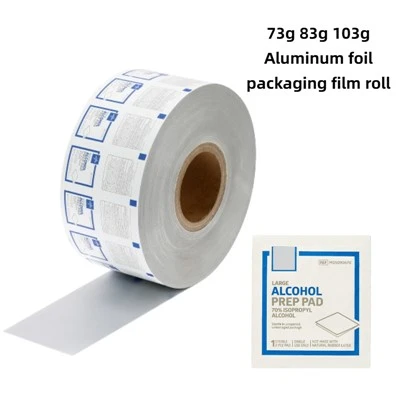
Aluminum foil possesses both thermal conductivity and thermal insulation properties. Its heat transfer depends on the temperature difference between its two sides, making it suitable for applications in food, construction, and industry.
Thermal Conductivity of Aluminum Foil
Aluminum foil, made from aluminum sheets, has excellent thermal conductivity, rapidly transferring heat to its surface. This means that if aluminum foil is placed on a hot surface, it will quickly conduct heat to the surface, creating a high-temperature zone. Similarly, if placed on a cold surface, it will quickly conduct cold air to the surface, creating a low-temperature zone. Therefore, when using aluminum foil to wrap food or other items, it can effectively conduct heat for a short time, maintaining their temperature.
Insulation Properties of Aluminum Foil
Aluminum foil also possesses excellent insulation properties. In fact, it is an excellent insulation material. Aluminum foil can prevent external heat from entering a room or container and prevent heat loss from the room/container. This means that if aluminum foil is placed on food or other temperature-sensitive items, it can help maintain a constant temperature.
Applications of Aluminum Foil
The thermal conductivity and insulation properties of aluminum foil depend on the degree of temperature difference between the two sides. If the temperature difference between the two sides is large, the thermal conductivity of aluminum foil may weaken its insulation performance; conversely, if the temperature difference is equal, it may exert both thermal conductivity and insulation effects. Aluminum foil has wide applications in food, construction, and industrial fields. For example, in food packaging, it can maintain temperature to preserve the freshness and flavor of food; in the construction industry, it can be used for thermal insulation; and in industrial applications, aluminum foil is widely used in various processing steps.